Tuesday, 29 September 2015

Drug Discovery Technologies Market 2012-18

Drug discovery technologies play a significant role in the field of pharmaceuticals as they heavily contribute to the introduction of drugs to the market. The application of drug discovery technologies have a significant opportunity in  the launch of drugs for severe diseases such as cancer, cardiovascular diseases, Parkinson’s disease, central nervous system disorders and others. However, the slow growth in the introduction of blockbuster drugs could pose a major threat for the growth of this market.

The major technologies in the drug discovery market are proteomics, genomics, QPCR, DNA and protein microarrays, high-throughput screening, mass spectrometry, laboratory information management systems, microfluidics, gel electrophoresis, chromatography, and protein and nucleic acid isolation.

As the global population ages, there is a growing pressure to keep the healthcare costs under control. Senior citizens are more prone to chronic diseases. It is in the nation’s best interests to keep its population healthy. In addition to this the pressure is paired with the government’s and administration’s responsibility to pay for healthcare. This situation will magnify in intensity if nothing is done to improve the status of treatment and prevention of diseases among the aging population. 

Apart from facing these pressures, the pharmaceutical manufacturers also face an impending surge of expiring patents. This will result in reduced profits of pharma companies. The market players in this field have begun to respond to these factors by restructuring their strategies and bringing innovation in their products thus, improving their productivity and efficiency. Despite these measures, pharmaceutical companies face the fact that drug discovery and development consumes a huge amount of time and money. For instance, drug discovery and development from scratch may take around 15 years and costs about USD 500 million until it is introduced in the market.

Big Data Analytics: The Next Evolution In Drug Development

The drug development process is complex and financially risky. A recent study by The Tufts Center for the Study of Drug Development estimates the cost of developing a new drug at $2.6 billion and suggests that costs of drug development are rising with a compound annual growth rate of 8.5 percent. These rising costs are largely driven by increases in out-of-pocket costs, such as larger clinical trial sizes and higher failure rates for drugs required to demonstrate superiority. Even when considering the efficacy of the 10 highest-grossing approved drugs in the United States, the fact is that for every patient a drug does help, between three and 24 patients fail to show improvement after treatment. Clinicians are typically forced to address this variability in patient outcomes with a trial-and-error approach to intervention, increasing healthcare costs and adding a burden to the patient.

Drug Developers, Providers, And Patients Need A Better Option 

High-throughput technologies are ushering in the era of Big Data in drug development, allowing researchers to assay patients in terms of their genome, epigenome, proteome, metabolome, and microbiome. Precision medicine initiatives are being undertaken to tailor disease treatment by taking into account individual variability in molecular and cellular systems. A biomarker- and technology-driven approach to developing targeted therapies and patient selection strategies has the potential to increase success in the drug development process, decrease cost, and ultimately improve patient outcomes with directed intervention. Read More

S. Pandarinath, Pharmacist, Certified Pharmacovigilance Professional.

Serious Event or Serious Suspected Adverse Reaction in Pharmacovigilance Practice

Image result for serious adverse drug reaction
An adverse event or suspected adverse reaction is considered "serious" if, in the view of either the investigator or sponsor, it results in any of the following outcomes :

-Death
-A life-threatening adverse event
-Inpatient hospitalization, or prolonged of existing hospitalization
-A persistent disability to conduct normal functions
-A congenital anomaly/birth defect

Important medical events that may not result in death, be life threatening, or require hospitalization may be considered serious, when based upon appropriate medical judgment, they may jeopardize the patient or subject and may require medical or surgical intervention to prevent one of the outcomes listed in this definition.

Author- Sirisha Boidapu, Pharmacist, PV Professional

Monday, 28 September 2015

Researchers are studying fish which can repair their own hearts.

Hundreds of thousands of people in the UK are living with debilitating heart failure. They can’t regenerate their damaged hearts. But zebrafish can. If part of their heart is damaged they can repair it in a matter of weeks, just like we are able to mend a broken bone.  That’s why our Mending Broken Hearts Appeal is funding researchers to find out what their secret is.

Because zebrafish are transparent early in their life cycle, it’s easy for researchers to see their hearts and blood vessels grow. Their hearts begin to develop after just 12 hours, and they reach adult size – about 3cm long – in about three months, so they can provide quick research results. Read More

Biological similarity of humans and other animals


Although humans and animals (technically “non-human animals”) may look different, at a physiological and anatomical level they are remarkably similar. Animals, from mice to monkeys, have the same organs (heart, lungs, brain etc.) and organ systems (respiratory, cardiovascular, nervous systems etc.) which perform the same functions in pretty much the same way. The similarity means that nearly 90% of the veterinary medicines that are used to treat animals are the same as, or very similar to, those developed to treat human patients. There are minor differences, but these are far outweighed by the similarities. The differences can give important clues about diseases and how they might be treated – for instance, if we knew why the mouse with muscular dystrophy suffers less muscle wasting than human patients, this might lead to a treatment for this debilitating and fatal disorder. Read More


More investment to characterize animal models can boost the ability of preclinical work to predict drug effects in humans


Mice take the blame for one of the most uncomfortable truths in translational research. Even after animal studies suggest that a treatment will be safe and effective, more than 80% of potential therapeutics fail when tested in people. Animal models of disease are frequently condemned as poor predictors of whether an experimental drug can become an effective treatment. Often, though, the real reason is that the preclinical experiments were not rigorously designed. 
The series of clinical trials for a potential therapy can cost hundreds of millions of dollars. The human costs are even greater: patients with progressive terminal illnesses may have just one shot at an unproven but promising treatment. Clinical trials typically require patients to commit to year or more of treatment, during which they are precluded from pursuing other experimental options. Launching a clinical trial without the backing of robust animal data keeps patients out of tests for therapies that may have a better chance of success.Read More

Sunday, 27 September 2015

Frequency of adverse drug reactions

Frequency of adverse drug reactions

Whenever possible, an estimate of frequency should be provided, expressed in standard category of frequency. It is always difficult to estimate incidence on the basis of spontaneous reports, owing to the uncertainty inherent in estimating the denominator and degree of under-reporting. However, whenever possible, an estimate of frequency should be provided and in a standard form.
The following standard categories of frequency are recommended:

Very common
> 1/10 (> 10%)
Common (frequent)
> 1/100 and < 1/10 (> 1% and < 10%)
Uncommon (infrequent)
> 1/1,000 and < 1/100 (> 0.1% and < 1 %)
Rare
> 1/10,000 and < 1,000 (> 0.01% and < 0.1%)
Very rare
< 1/10,000 (< 0.01%)

Current status of clinical research in India

Image result for clinical research news india 
Clinical research has grown exponentially over the past decade in India because of cost advantage, treatment naïve patient, qualified doctors conversant in English etc. India was the second most preferred country to conduct clinical trials outside the US in 2009. However, recent years have witnessed a decline in number of trials in India (529 in 2010; 253 in 2012). The number of drugs entering the Indian markets had been gradually reducing even before the current slump in clinical research activity (270 in 2008;140 in 2011; 44 in 2012 and 25 in 2013). This necessitates a relook on the strategy so as to optimise clinical research in Indian context. The problems and possibilities around the clinical research arena can be broadly grouped as capacity building issues and ethico – regulatory ones.

Read More

Regulators and patients driving demand for Phase IV studies, says Quintiles


Full spectrum CROs are well-positioned to service the growing demand for late-stage observational trials driven by regulatory and patient pressure, says Quintiles.

Omega (Ω)

A measure of disproportionate reporting for drug-drug-ADR triplets in ICSR databases, designed to highlight potential signals of drug-drug interactions. Just like the more established disproportionality measures for drug-ADR pairs, Ω is based on a contrast between the observed and expected number of reports. A positive Ω indicates higher reporting than expected.

Rechallenge

The point at which a drug is again given to a patient after its previous withdrawal.

Dechallenge

The withdrawal of a drug from a patient; the point at which the continuity, reduction or disappearance of adverse effects may be observed.

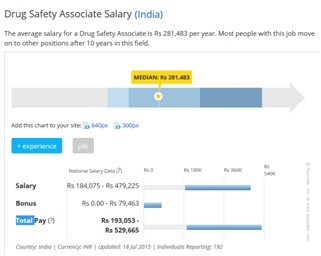
Salary in Pharmacovigilance for freshers in INDIA


Friday, 25 September 2015

Discover the benefits of collaborating with your central lab partner early in protocol development

Until recently, sponsors and CROs engaged their central laboratory simply for routine safety testing. However, as clinical trial protocols have grown in complexity expert consultation in diagnostic testing at the beginning of protocol development is fast becoming critical to optimize test selection and match clinical diagnostic endpoints to outcomes. 

This e-book explores how collaborating with your central lab partner early in protocol development can help optimize clinical trials, drive efficiencies, avoid potential protocol amendments, and minimize costly study delays.

Read More

Author: Susmitha Pandarinath, Pharmacist, Certified Pharmacovigilance Professional.

Regulators and patients driving demand for Phase IV studies, says Quintiles


Full spectrum CROs are well-positioned to service the growing demand for late-stage observational trials driven by regulatory and patient pressure, says Quintiles.

Read More

Author: Susmitha Pandarinath, Pharmacist, Certified Pharmacovigilance Professional.


What do you mean by pharmacovigilence in drug development process ?

 It is the mission of pharmaceutical research companies to take the path from understanding a disease to bringing a safe and effective new treatment to patients. the science and activities relating to the detection, assessment, understanding and prevention of adverse effects or any other drug related problem.

Pharmacovigilance is defined as the detection, assessment and prevention of adverse drug reactions in humans.


It is the process of:
  • Monitoring medicines as used in everyday practice to identify previously unrecognised adverse effects or changes in the patterns of their adverse effects
  • Assessing the risks and benefits of medicines in order to determine what action, if any, is necessary to improve their safe use
  • Providing information to users to optimise safe and effective use of medicines
  • Monitoring the impact of any action taken

Scientists work to piece together the basic causes of disease at the level of genes, proteins and cells. Out of this understanding emerge “targets,” which potential new drugs might be able to affect Researchers work to validate these targets, discover the right molecule (potential drug) to interact with the target chosen, test the new compound in the lab and clinic for safety and efficacy and gain approval and get the new drug into the hands of doctors and patients. This whole process takes an average of 10-15 years.

Author: Susmitha Pandarinath, Pharmacist, Certified Pharmacovigilance Professional.

Pharmacovigilance in Drug Development

 Pharmacovigilance (PV) is the science and activities relating to the detection, assessment, understanding and prevention of adverse effects or any other drug related problem. It collects, records, codes adverse drug reactions analyses and assesses the reports, promotes the safe use of drugs, creates appropriate structures and means of communication needed to perform its tasks.The aims of PV are to improve patient care and safety, improve public health and safety, contribute to the assessment of benefit, harm, effectiveness and risk of medicines, promote education and clinical training, promote effective communication to public and promote rational and safe use of medicines.

The process of drug discovery and development is a long-term, competitive, expensive and complicated process. Bringing the drugs from the bench to the market, that is, from screening and identification of the drug as a compound to its introduction to the market, takes several years of efforts. The complete process of presenting a drug to the patients involves four stages-

1. Drug discovery
2. Drug development
3. Regulatory review and approval
4. Marketing

Pharmacovigilance is the pharmacological science which deals with drug safety including accumulation, detection, assessment, monitoring, and prevention of adverse effects of the drugs.
It is a process focusing on detection of unidentified safety issues, identification of risk factors, quantifying risks and preventing patients from being adversely affected unnecessarily.

Pharmacovigilance plays a critical role at various stages of drug discovery and development process
for example, in clinical research, pharmacovigilance requires submission of the reports on adverse events during clinical trials to regulatory authorities within a specified time frame, notification of such events to all investigators and ethics committees, and a safety review by independent Drug Safety Monitoring Boards (DSMB). Annual reports, a summary and analysis of all the serious adverse events, new safety findings from animal studies, and evaluations of benefit and risk are also required.

Pharmacovigilance also plays a significant role when the drug is commercialized. Reporting the safety reviews is mandatory for companies in a marketing phase. These safety reviews include
-Risk Management Plan (RMP)
-Periodic Benefit Risk Evaluation Report (PBRER)
-The Development Safety Update Report (DSUR)
-Periodic Safety Updates Report (PSUR)
-Phase 4 studies (post-marketing surveillance)

Pharmacovigilance plays a very critical role in drug discovery and development process. It will require comprehensive documentation and severe monitoring at every phase of drug development including pharmacovigilance inspection and audit, risk management, and reporting of ADR medicinal drugs, periodic safety update report, and post-authorization safety studies, additional monitoring, and safety communication.

Author- Sirisha Boidapu, Pharmacist, PV Professional

Wednesday, 23 September 2015

Drug Discovery-What is all about?


Clinical trials are conducted in a series of steps, called phases - each phase is designed to answer a separate research question.

  • Phase I: Researchers test a new drug or treatment in a small group of people for the first time to evaluate its safety, determine a safe dosage range, and identify side effects.
  • Phase II: The drug or treatment is given to a larger group of people to see if it is effective and to further evaluate its safety.
  • Phase III: The drug or treatment is given to large groups of people to confirm its effectiveness, monitor side effects, compare it to commonly used treatments, and collect information that will allow the drug or treatment to be used safely.
  • Phase IV: Studies are done after the drug or treatment has been marketed to gather information on the drug's effect in various populations and any side effects associated with long-term use.

Freelance Editors- Pharmaceutical Sciences Cactus Communications

Cactus Communications Careers

Job Description


Cactus Communications is a pioneer in language services, serving more than 60,000 clients across 116 countries. We employ a global team of highly skilled editors who are experts in various academic fields. Were currently looking for specialist freelance copyeditors and substantive editors from all across the world.

Why this is a great opportunity
  • Flexibility to determine your schedule and work hours 
  • Potential to earn above INR 60,000 per month (based on regular availability) 
  • Additional fees of up to 20% 
  • No need to relocate. As this is a freelance opportunity, applicants are free to work from home.
What you will do?

Edit manuscripts such that the final text is in standard scientific English and is free of unclear or unidiomatic sentences
Adhere to job-specific instructions and format manuscripts according to the target journal when required
Ensure that all subject-specific conventions are followed

APPLY ONLINE

10 Proven Ways to Reduce the Cost of Clinical Trials

Trimming your study budget is a good thing, right? When you can cut costs without compromising data integrity or accuracy, that's usually a positive. But when cost cutting is only about saving money no matter what, it can increase frustration, impair quality, damage reputations and end up increasing project costs in the long run. There are, however, a number of evidence-based strategies you can use to streamline your research and trim budgets that maintain – and, in many cases, enhance – data quality, staff productivity and employee satisfaction. Read to learn more. Read More